Journal//3 min read
Hardness and alkalinity are not the same number
Total hardness (GH) is the amount of calcium and magnesium in water. Alkalinity (KH) is its capacity to neutralise acid, and it is almost entirely bicarbonate. Hardness mainly affects body and weight; alkalinity mainly buffers perceived acidity. Water can be high in one and low in the other, which is why the phrase “hard water” on its own never tells you how your coffee will taste.
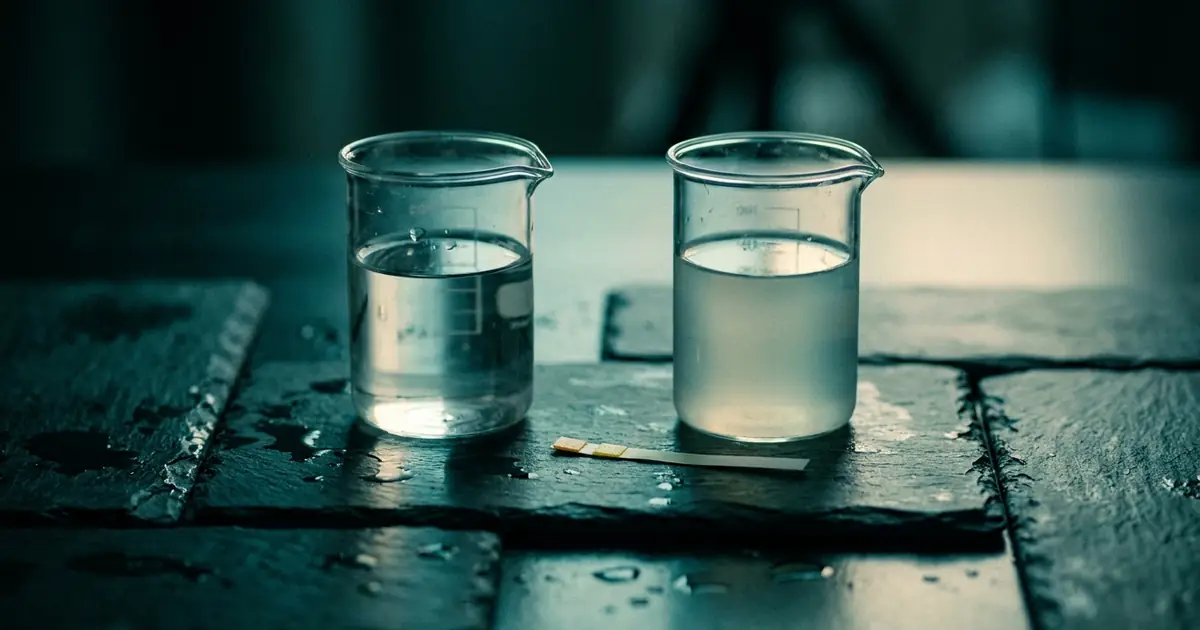
If you read enough coffee blogs you will come away believing that water has one dial on it, running from soft to hard, and that turning it changes everything. It has two dials, they were installed by different parts of the water cycle, and they are measured separately by every utility in Europe.
The two numbers
- Total hardness (GH) — dissolved calcium and magnesium. German utilities publish it as Gesamthärte in °dH, French ones as TH in °f. This is the number that tracks body, weight and mouthfeel.
- Alkalinity (KH) — the water's ability to neutralise acid, overwhelmingly from bicarbonate. German utilities publish it as Säurekapazität K S4,3 in mmol/L. This is the number that flattens perceived acidity.
They often move together, because both come from limestone, and that co-movement is exactly why the two get confused. But they are not locked to each other, and the cases where they come apart are the cases that matter most to anyone brewing at home.
What the SCA's own chart shows
The Specialty Coffee Association publishes a Water Chart with hardness on one axis and alkalinity on the other. Read the four corners and the independence becomes impossible to miss: high hardness with low alkalinity is labelled heavy, dull and sour — not flat. High alkalinity is labelled chalky and flat at both hardness levels.
Why the distinction is not pedantry
Two ordinary situations break the bundle. Sodium ion-exchange softeners — common in hard-water households across Germany and the UK — strip calcium and magnesium but leave alkalinity completely untouched. And sulfate-dominated water can carry high hardness with modest alkalinity. In both cases a recommendation built on the word “hard” alone will point the wrong way.
How much does it actually change the cup?
Less than folklore claims, and the honest answer is that it is contested. A 2024 experimental study in Heliyon added calcium and magnesium salts at realistic tap-water concentrations and found minimal variation in the organic acids extracted — and got similar results whether the salt was added before or after brewing, which places the interaction in the cup rather than in the coffee bed. A 2021 study in Gıda, working with Turkish coffee, did find hard water raised bitterness and suppressed roasted, citrus and sweet notes.
Both things are true at once: water measurably changes coffee, and the mechanism usually offered for why is not settled. Grind, dose, ratio and freshness remain larger levers than mineral content within drinking-water ranges.
Questions this raises
- What is the difference between water hardness and alkalinity?
- Hardness (GH) measures dissolved calcium and magnesium and mainly affects body and weight in the cup. Alkalinity (KH) measures the water's capacity to neutralise acid, comes almost entirely from bicarbonate, and mainly buffers perceived acidity. They are measured separately and can vary independently.
- Does hard water flatten coffee?
- Not by itself. The SCA Water Chart labels high hardness with low alkalinity as heavy, dull and sour, while high alkalinity is labelled chalky and flat at any hardness level. Flattening tracks alkalinity, not hardness.