Journal//5 min read
Choosing espresso beans for UAE water
UAE network water is desalinated and remineralised, and the published figures put it low in hardness: a typical 60.7 mg/L as CaCO₃ in Dubai, an average of 50.08 mg/L across Abu Dhabi. Hardness and alkalinity both shape how an espresso tastes, but grind, dose, ratio and freshness are bigger levers. Measure your water, choose beans you enjoy, and dial in from there — any blend-to-water match, ours included, is a recommendation, not a proven rule.
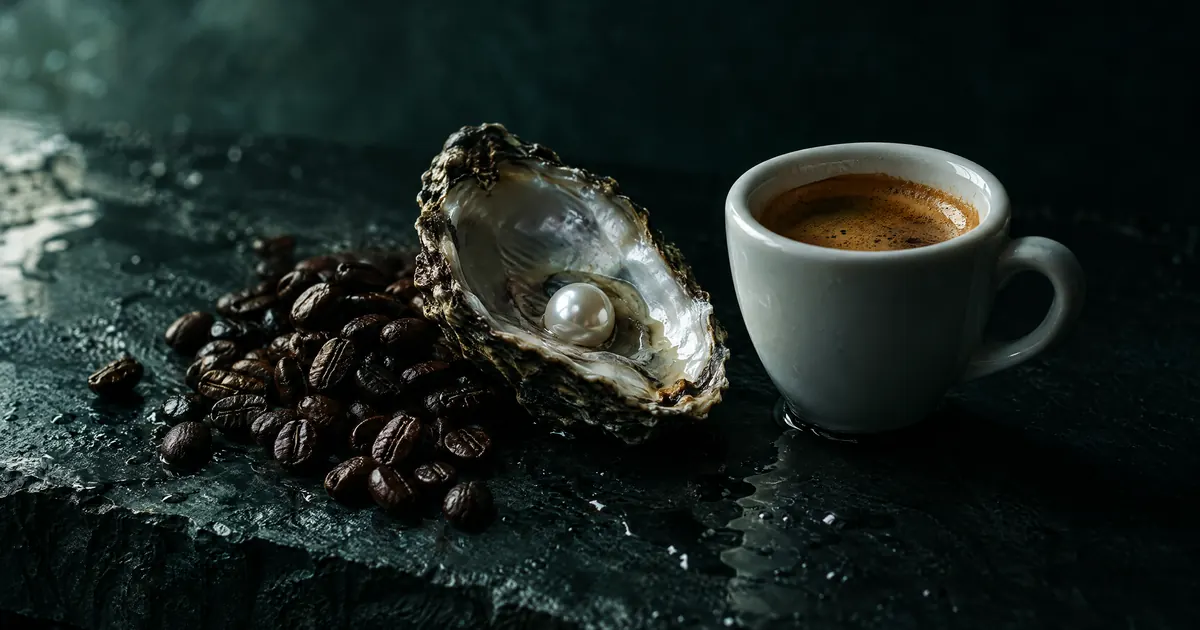
Search for the best espresso beans in the UAE and you will mostly find lists of brands. A list cannot account for the one ingredient that changes from one kitchen to the next and makes up most of the cup: the water. This is not a ranking. It is what is known about water and espresso, what is not, and how to use both when choosing beans in Dubai, Abu Dhabi or anywhere else in the Emirates.
Why the same beans taste different in different water
Two numbers matter, and they do different jobs. Total hardness — calcium and magnesium — tracks body and weight. Alkalinity — mostly bicarbonate — buffers acidity: high alkalinity mutes it, low alkalinity buffers less and lets more of it through. The SCA Water Chart maps both, and its corners show the split: low hardness with low alkalinity is labelled weak, sour and sharp; high alkalinity is labelled chalky and flat at any hardness.
How big the effect is remains debated. A 2024 experimental study in Heliyon found minimal change in extracted acids at tap-water mineral levels. A 2021 study in Gıda, on Turkish coffee rather than espresso, found hard water raised bitterness and muted roasted, citrus and sweet notes. Water changes coffee measurably; exactly how, and by how much in an espresso, is still open.
What UAE water looks like on paper
DEWA publishes a typical total hardness of 60.7 mg/L as CaCO₃ for Dubai's potable water, within a specification of 40–120 mg/L, and an M-alkalinity of about 49–51 mg/L. For Abu Dhabi, the most specific figure we found is an emirate-wide network average of 50.08 mg/L (Statistics Centre – Abu Dhabi, 2018 edition). Sharjah and the emirates served by Etihad Water and Electricity publish no hardness figures we could find.
Both published numbers are low in hardness, and neither is an extreme on the SCA chart. Both describe water at production or network level: storage tanks and pipework in your building sit between those figures and your cup, and no public data says how much they change hardness.
Why we designed Leucosia for soft water — and what that is not
We make three blends, each designed for a band of water hardness. By our own thresholds, the published UAE figures fall in the soft band, and the blend we built for it is Leucosia: roasted longer and blended heavier, with notes of cocoa, hazelnut and brown sugar. The reasoning is compensatory — water carrying little hardness tends towards a lighter cup, so we add weight on the coffee side.
Tap, filtered or bottled
- Tap — measure it with GH and KH drop tests rather than a TDS meter. If it matches the published figures, you are brewing with low-hardness water.
- Filtered — jug and under-sink cartridges vary: some reduce carbonate hardness and alkalinity, others mainly remove chlorine and odours. Check the manufacturer's data and measure before and after.
- Reverse osmosis — home RO units remove almost all minerals. Unless the unit remineralises, the result is very low in both hardness and alkalinity, the corner the SCA chart labels weak, sour and sharp. Some machines use conductivity-based level probes that need some minerals to work; check your manual.
- Bottled — mineral content varies widely between brands, and the label gives you what you need. Hardness as CaCO₃ is roughly 2.5 × calcium + 4.1 × magnesium (both in mg/L); alkalinity as CaCO₃ is roughly 0.82 × bicarbonate.
Whichever you choose, keep it constant: switching between tap and two bottled brands from week to week makes any bean impossible to dial in. And if the water you actually brew with measures well above the published tap figures, our medium- and hard-water blends, Parthenope and Ligeia, are the ones we would suggest instead — on the same terms, as a recommendation rather than a proof.
Dial-in comes first
Within drinking-water ranges, grind, dose, ratio, temperature and freshness move an espresso more than mineral content does. A practical order:
- Fix the dose and the basket, and change one variable at a time.
- Grind first. If the shot runs fast and tastes sour or thin, go finer; if it runs slow and tastes harsh or bitter, go coarser.
- Then ratio. A slightly longer ratio can soften a sour cup; a shorter one can add weight.
- Temperature last, in small steps: a little hotter if sour, a little cooler if bitter.
- Keep notes. Water is a constant only if you make it one.
For café groups: one water profile across every site
A café group with branches across several emirates cannot assume the same water at every counter: building tanks, pipe runs and supply all differ, and for some emirates no hardness figure is published at all. The practical answer is to make water part of the specification — the same filtration system and cartridge at each site, a target GH and KH, a regular drop test logged per branch, and one recipe that holds while those numbers hold. Choose the beans against that profile, not against an emirate's average.
If you run a café or a group and want to try our blends against your water, samples and supply terms are discussed through the inquiry form.
Questions this raises
- What are the best espresso beans for UAE water?
- There is no proven best. UAE network water is low in hardness by its published figures, and we designed our Leucosia blend for that kind of water — but that pairing is our recommendation, not a validated rule. Choose beans whose flavour you enjoy, measure your water, and dial in grind, dose and ratio first.
- Does water affect how espresso tastes?
- Yes, measurably. Hardness mainly affects body and weight; alkalinity mainly buffers acidity. How large the effect is in espresso, and through which mechanism, is still debated in the literature.
- Should I use tap, filtered or bottled water for espresso in the UAE?
- Any of them can work if you know what is in it and keep it consistent. Measure tap and filtered water with GH and KH tests; for bottled water, read calcium, magnesium and bicarbonate on the label. Be cautious with reverse-osmosis water that has not been remineralised: it is very low in both hardness and alkalinity.
- Are Italian coffee beans good for Dubai water?
- Where a coffee is roasted does not decide it. Italian espresso blends range from light to dark and from lean to heavy; what matters is how a particular blend tastes with your particular water. Ours are roasted in Italy to our profiles, and Leucosia is the one we designed for low-hardness water like Dubai's published figure.
- How should a café chain manage water across branches?
- Treat water as a specification: the same filtration and cartridge at every site, target GH and KH values, regular drop tests logged per branch, and a single recipe validated against that profile.